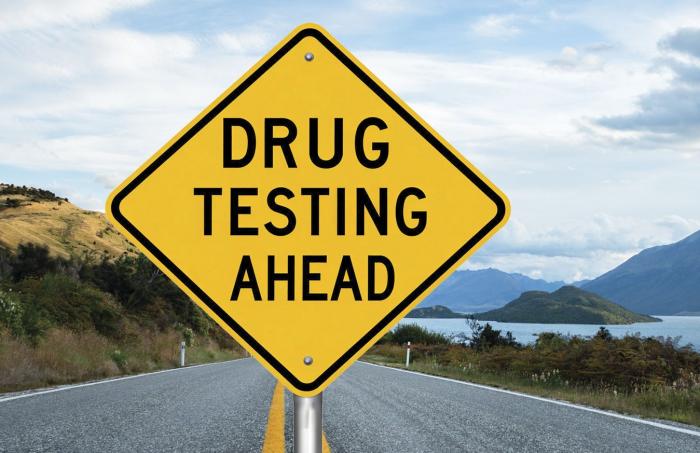
New Zealand’s new roadside drug testing regime is now in force, and drivers should be prepared to see it used more widely across the country.
For many years, drug driving enforcement has largely depended on Police forming a suspicion that a driver may be impaired, followed by a compulsory impairment test and, in some cases, a blood test.
The new regime adds a separate infringement-based process. In practical terms, Police can now use oral fluid screening tests at the roadside to check for recent drug use, even where there is no obvious sign of impairment.
A positive roadside result does not automatically mean a conviction, or even an immediate infringement notice. The process has several steps, and drivers should understand what Police can require, what happens after a positive result, and what limited defences may be available.
What is an oral fluid screening test?
An oral fluid screening test is a saliva-based roadside test.
The initial roadside test screens for four drugs:
- THC, associated with cannabis;
- methamphetamine;
- MDMA; and
- cocaine.
The roadside device does not give Police a detailed reading of the level detected. It gives a pass or fail result.
Importantly, the roadside screening result is not the final basis for an infringement. If the first test is positive, a separate oral fluid sample is collected and sent for laboratory analysis. That laboratory result determines whether an infringement notice may later be issued.
What happens if the first test is positive?
If the first oral fluid screening test is positive, Police must advise the driver of the result. An oral fluid sample is then taken for laboratory analysis, and the driver may also be required to undergo a second oral fluid screening test.
The second roadside test is important. Two positive roadside screening tests trigger a mandatory 12-hour stand-down from driving. That stand-down is immediate and is separate from any later infringement process.
The laboratory process is also broader than the initial roadside test. While the roadside screening test checks for four drugs, laboratory analysis can test for a wider list of qualifying drugs, including some prescription medications. If the laboratory result is positive at or above the relevant threshold, an infringement notice may be issued.
What are the possible penalties?
If laboratory analysis confirms one qualifying drug, the infringement penalty is generally a $200 fine and 50 demerit points.
If laboratory analysis confirms two or more qualifying drugs, the penalty is generally a $400 fine and 75 demerit points.
There are also separate consequences where alcohol and drugs are involved together.
These demerit points are significant. In some cases, a driver could accumulate a large number of demerit points from a single traffic stop, particularly if there are other traffic issues at the same time, such as using a mobile phone while driving or driving outside licence conditions.
What if a driver refuses the test?
Refusing or failing to comply with an oral fluid screening test is not treated in the same way as refusing a blood test, but it is still serious.
Under the infringement regime, failing or refusing to undergo the oral fluid screening process can result in a $400 fine, 75 demerit points, and a 12-hour driving stand-down.
However, the consequences can become much more serious if the matter moves into the compulsory impairment test or blood test pathway. Refusing a compulsory impairment test or a blood test can result in arrest and criminal charges.
The infringement pathway and the criminal pathway are different
The new regime creates two separate pathways.
The first is the infringement pathway. This is the roadside oral fluid screening process. It does not require Police to first suspect drug use. It can lead to infringement penalties, demerit points, and a 12-hour stand-down, but oral fluid testing alone does not result in a criminal conviction.
The second is the criminal pathway. This may arise where Police have good cause to suspect that a driver has consumed drugs. In that situation, Police may require a compulsory impairment test. If the driver does not satisfactorily complete that test, or if other statutory triggers apply, Police may require a blood test.
The criminal pathway carries much more serious consequences. Depending on the circumstances, it may lead to arrest, charges, licence suspension, vehicle impoundment, and penalties including fines or imprisonment.
Can a driver ask for independent testing?
Yes. If an infringement notice is issued and there is a sufficient oral fluid sample available, the driver can request private analysis of the sample.
That request must be made within 28 days after the infringement notice is served. The request must be made in writing and must identify the private analyst who will carry out the testing.
Anyone who receives an infringement notice and wants to challenge the result should act promptly.
What if the drug was prescribed medication?
There is a medical defence, but it is limited.
A driver may have a defence if the relevant drug was taken in accordance with a current and valid prescription, and the driver followed the instructions from their health practitioner or the manufacturer. A similar defence may apply where the drug was administered by a health practitioner and the driver followed the relevant instructions.
However, this is not a defence that can be raised at the roadside to avoid testing or a 12-hour stand-down. It is raised later, after an infringement notice has been issued or a charge has been laid.
Drivers taking prescription medication should keep clear records, including the prescription, pharmacy label, dosage instructions, and any relevant medical advice.
Key takeaway
Roadside drug testing is now part of New Zealand’s driving enforcement landscape.
Drivers should understand that Police may require an oral fluid screening test without first suspecting drug use. A positive roadside result starts a process that can lead to laboratory testing, infringement penalties, demerit points, and an immediate 12-hour driving stand-down.
Prescription medication does not automatically protect a driver at the roadside. The medical defence is important, but it applies later and depends on the medication being taken lawfully and in accordance with medical or manufacturer instructions.
This is a new regime, and its practical operation will continue to develop as it is used more widely.
Godfreys law.
Real People. Real Solutions.